Work continues to move forward across multiple areas of the Parallel Thimble Shoal Tunnel (PTST) project, with steady progress visible both on the islands and within the tunnel itself.
On Two Island, removal of the Omega trestle was paused during the colder months due to challenging wind and wave conditions. With warmer weather and calmer seas ahead, crews are preparing to resume dismantling operations as the remaining armor stone is placed along the berm. These large stones play a critical role in protecting both the island and tunnel from wave energy. The Omega trestle has already been successfully removed from One Island.
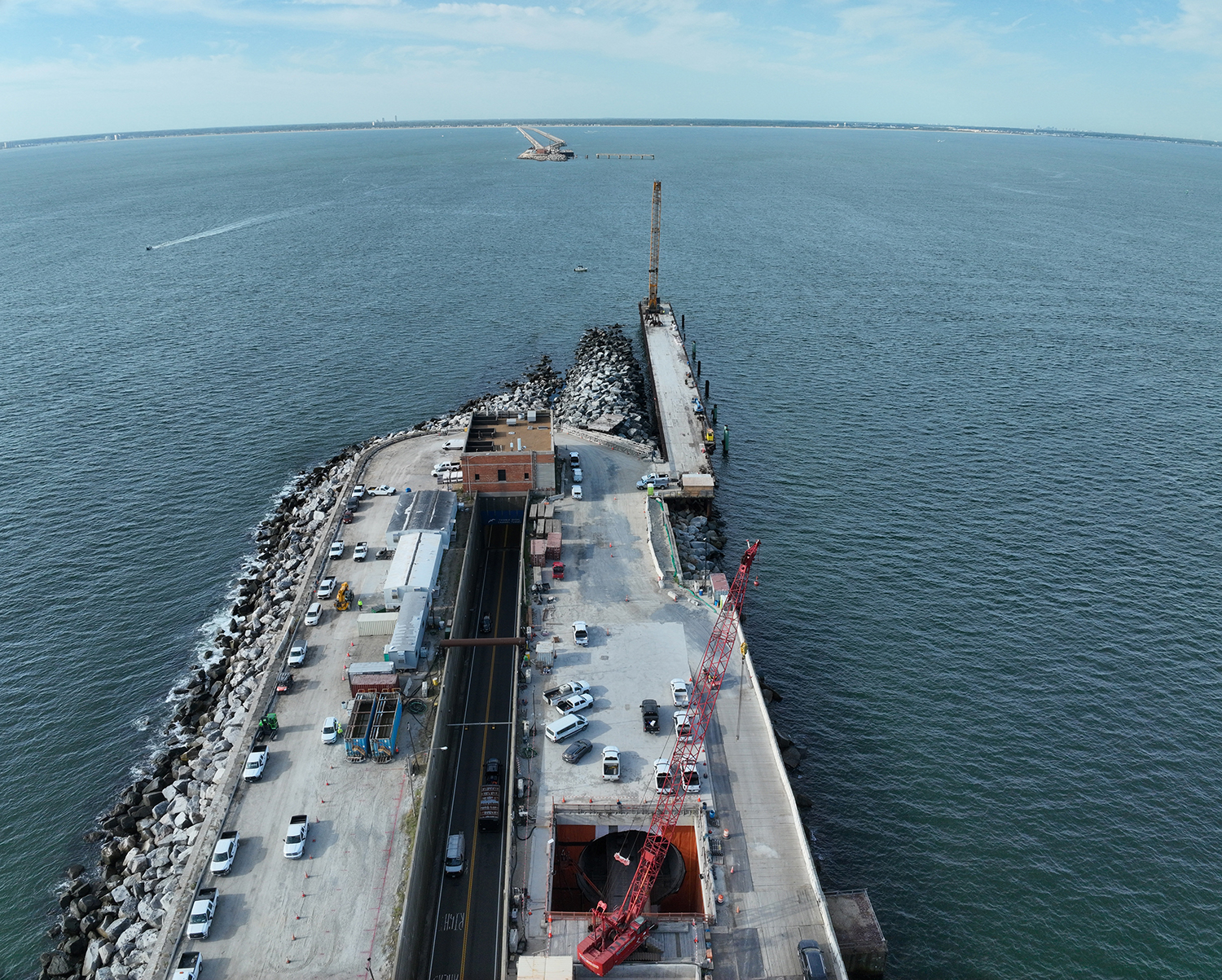
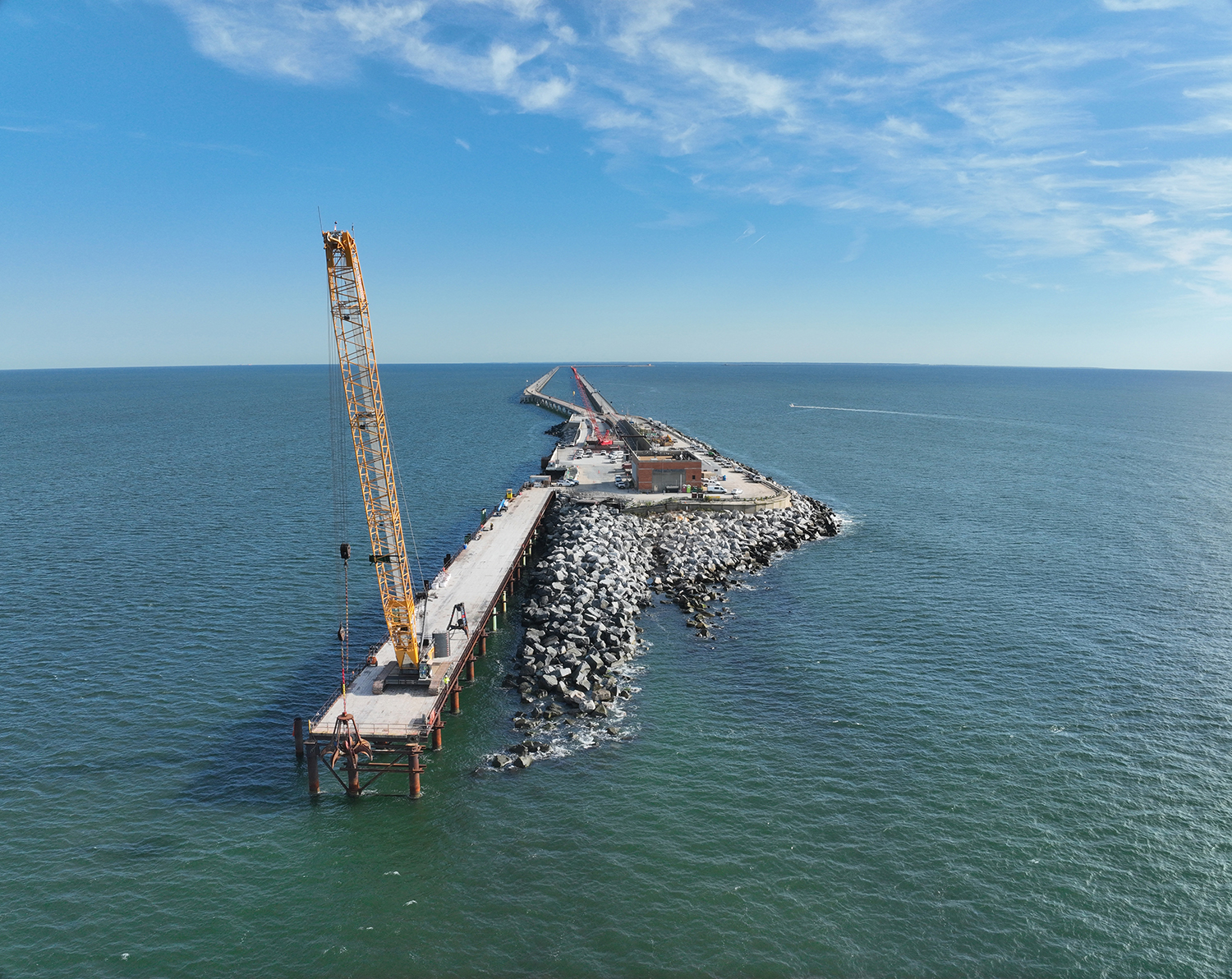
Looking north, removal of the Omega trestle and placement of armor stone continues on Two Island.
Concrete work continues to drive progress across the project. The walls of the ventilation building on Two Island are now visible to motorists crossing the facility.
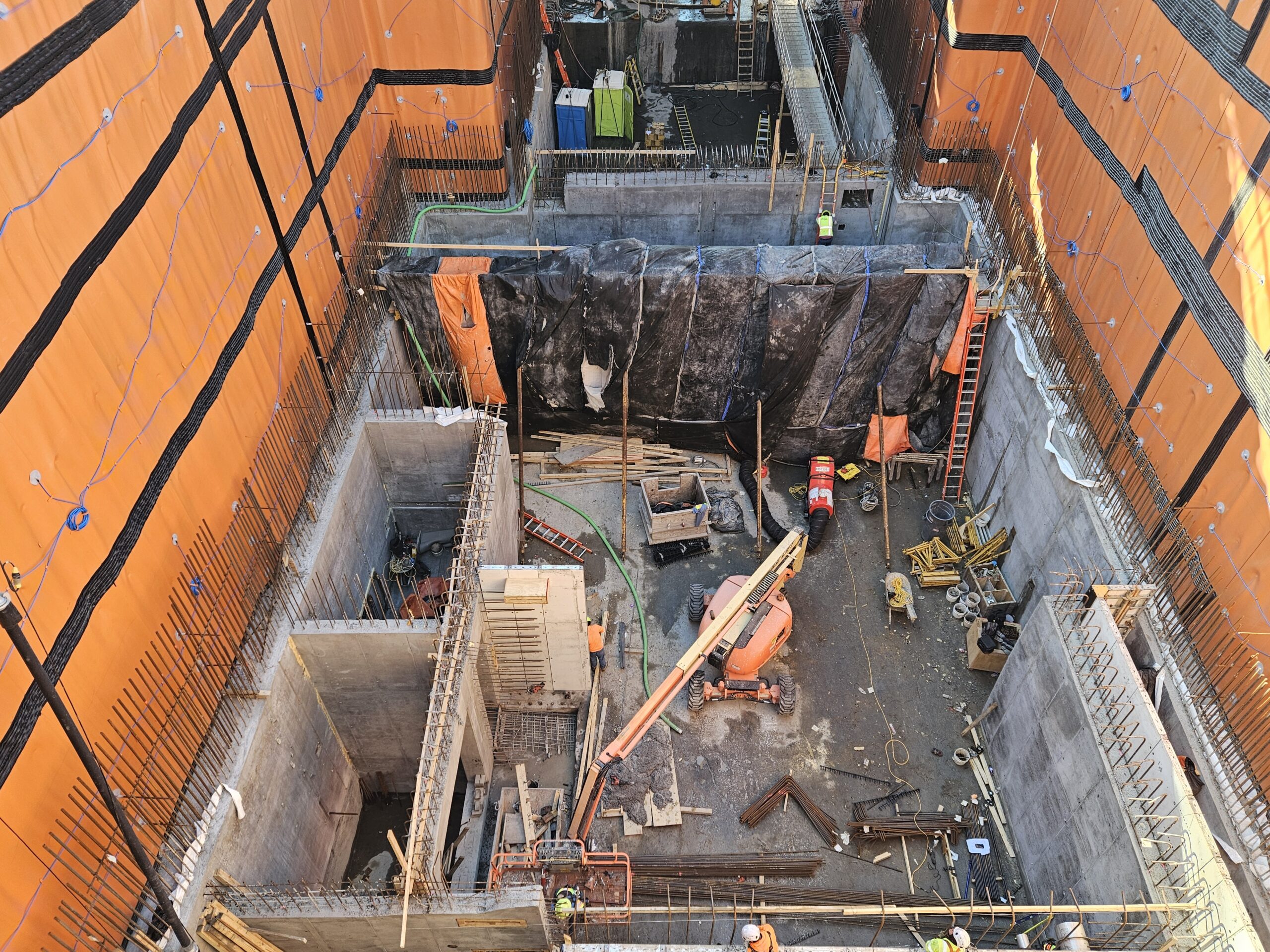
At the tunnel portals, installation of the waterproofing membrane – the bright orange material seen in photos – must be completed before concrete walls can be formed and poured. Concrete walls for the portal pump rooms, located below the roadway on each island, are now complete.
Additionally, the tunnel’s low point pump room, located mid-tunnel, has been enclosed with the placement of the new structural concrete roadway above it.
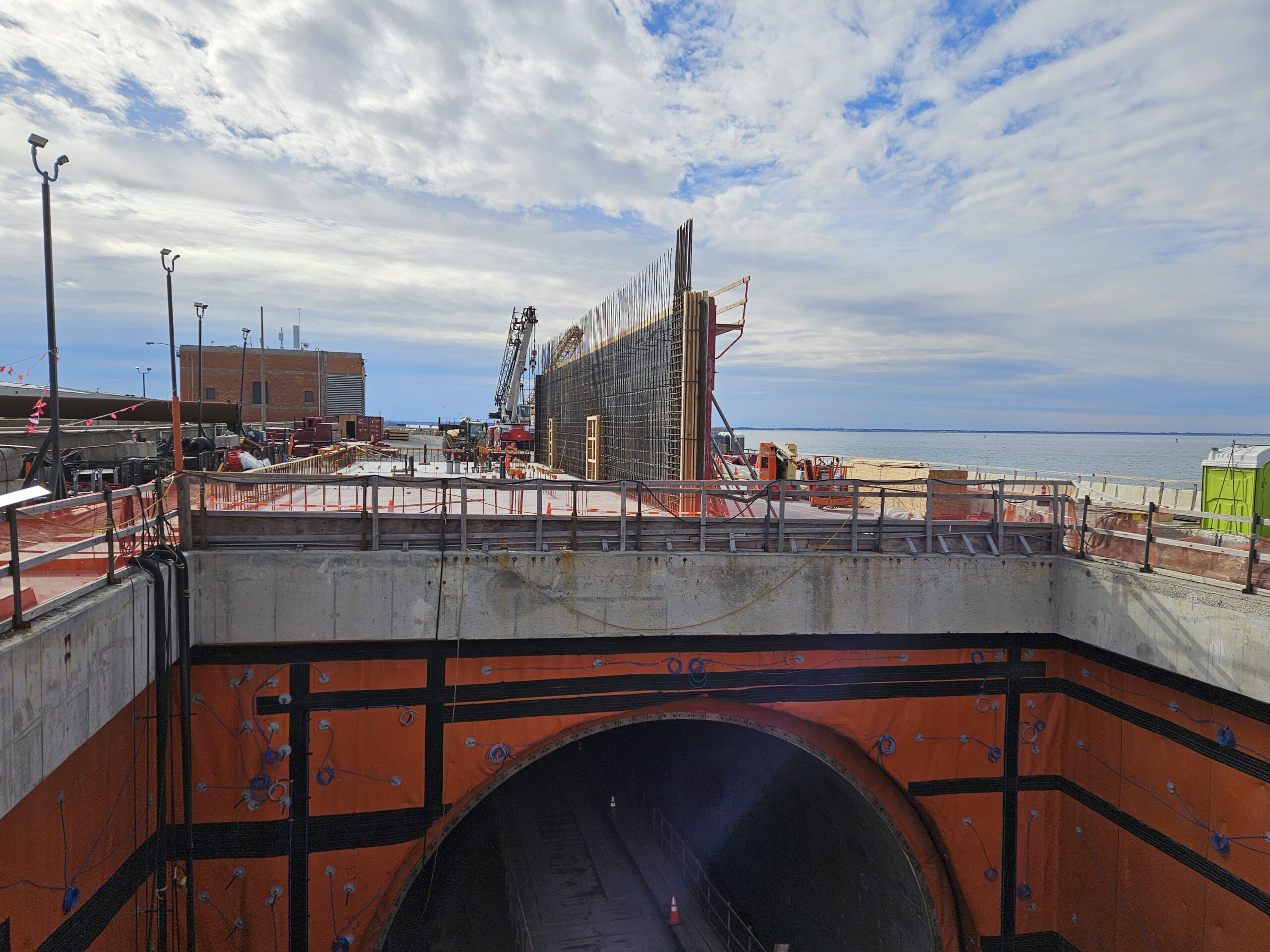
Pictured above is the orange waterproofing for the tunnel’s open approach. Walls of the ventilation building are visible.
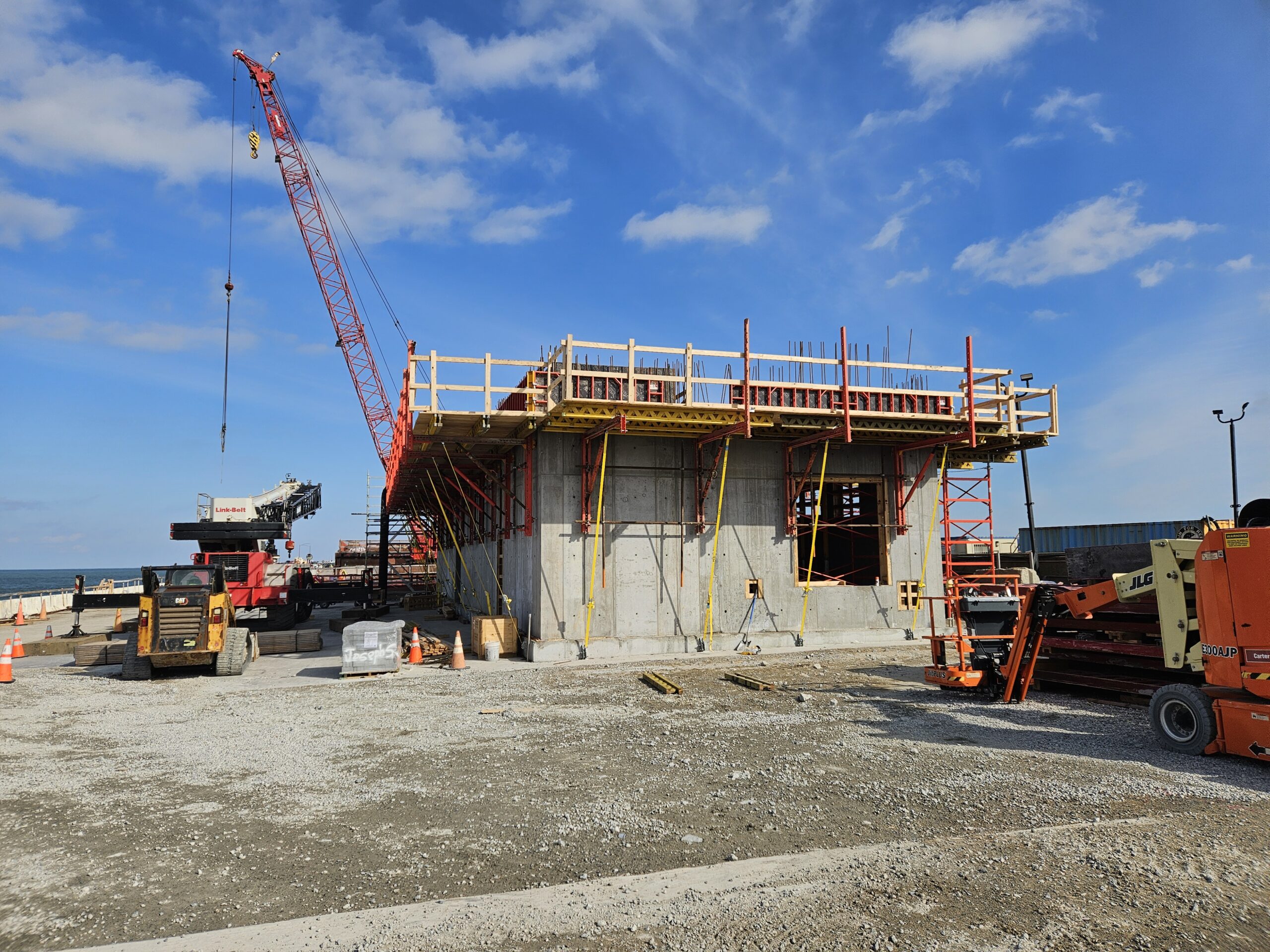
Pictured above is construction of the ventilation building on Two Island.
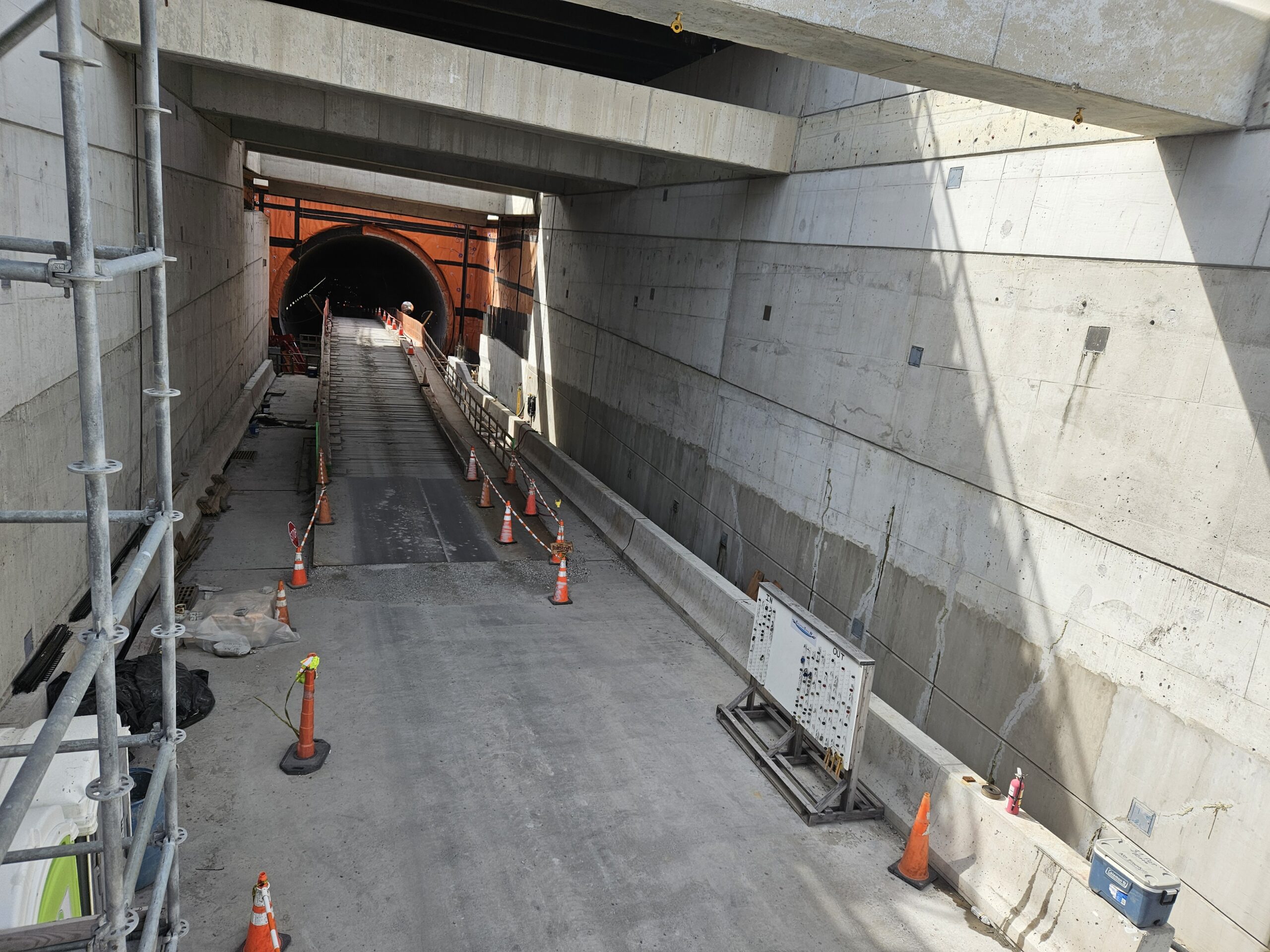
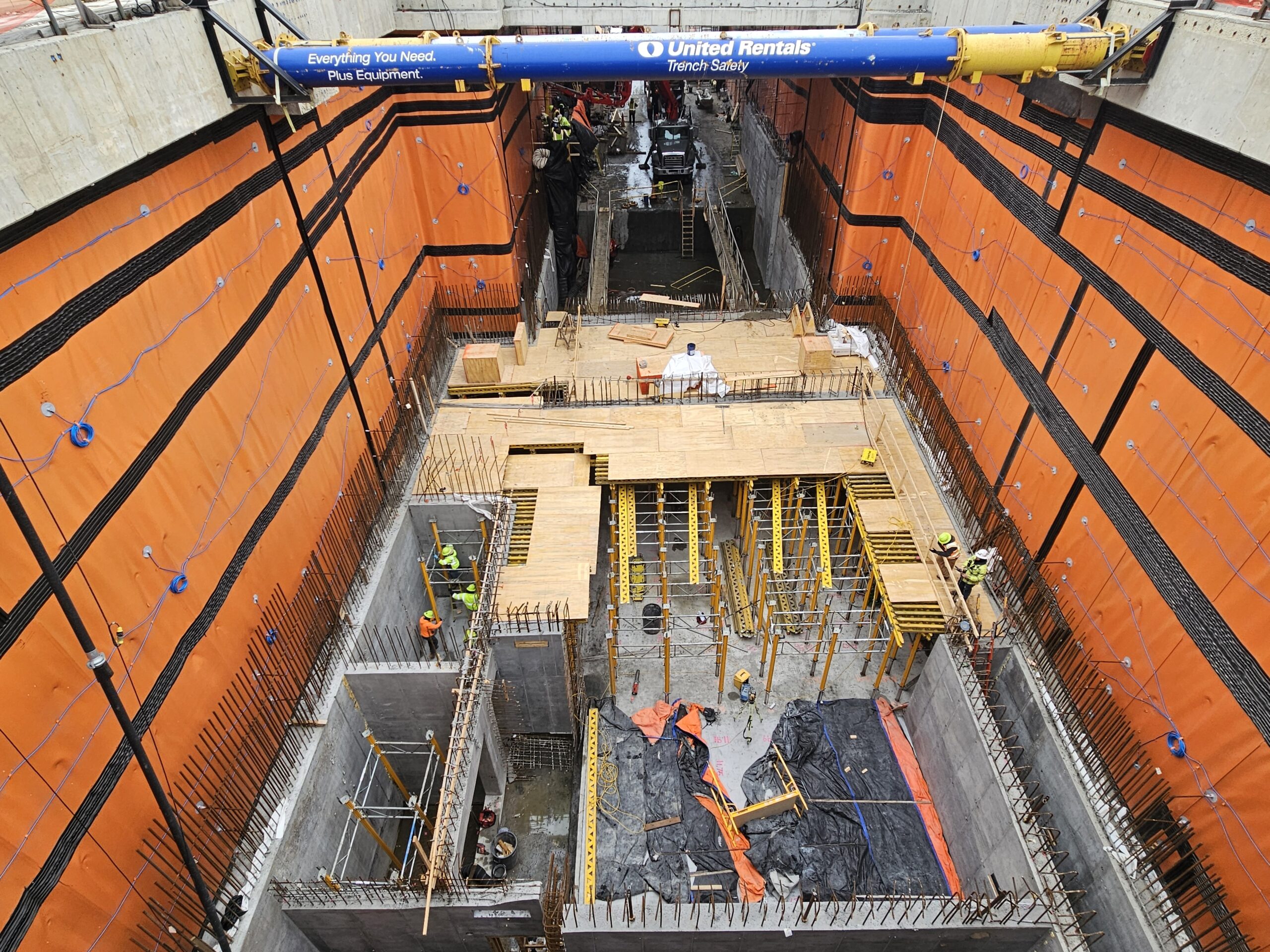
Orange waterproofing protection is visible at Two Island’s open approach. Also visible is the temporary bridge (above and below) that spanned the portal pump room during construction. This temporary bridge has since been removed.
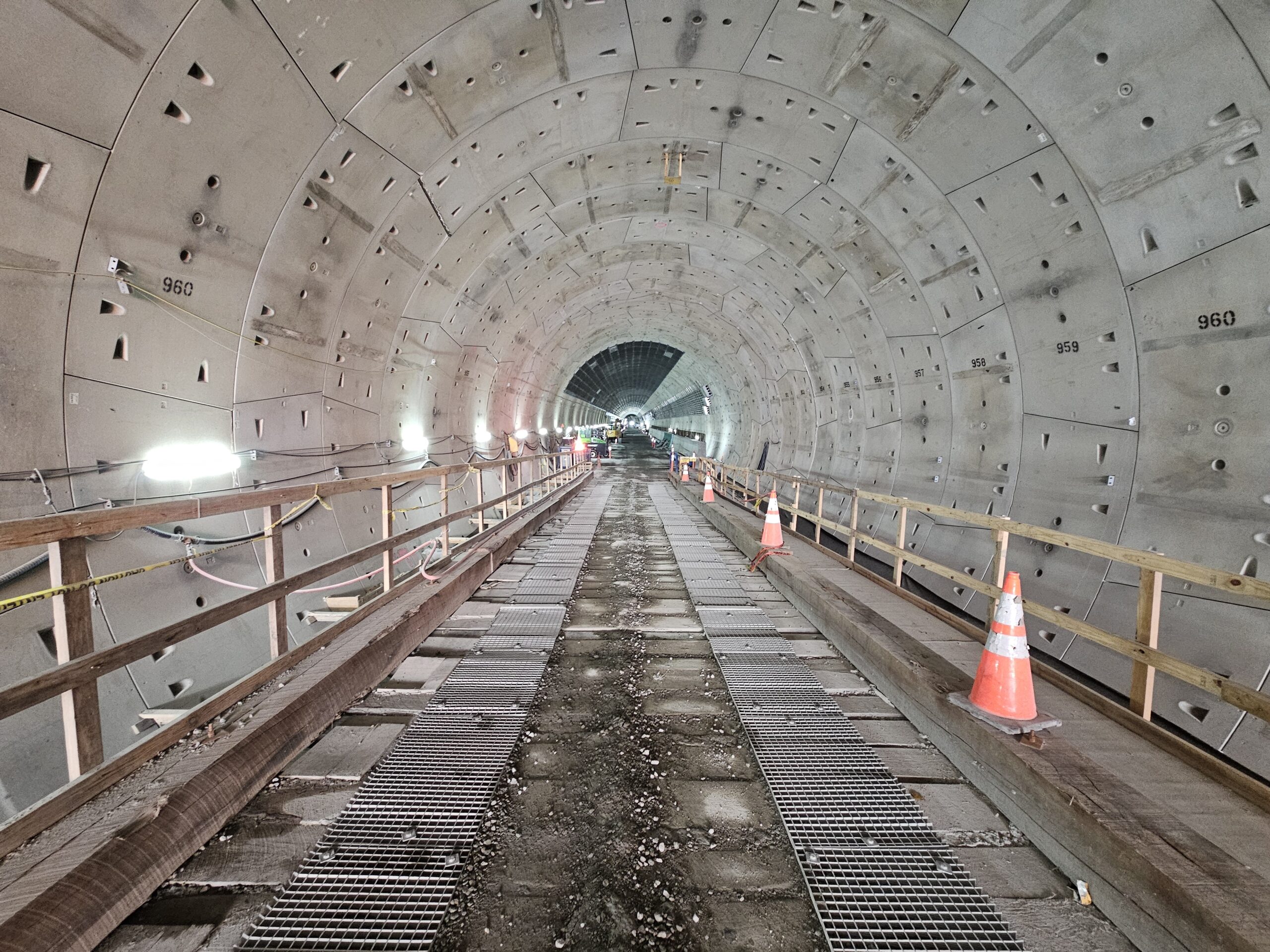
Now that the temporary bridge has been removed, work is underway to complete the formwork that will support the concrete roadway above it.
Once reinforcing steel is in place, concrete will be poured to form the finished slab. The reinforcing steel works in conjunction with the concrete to provide the strength needed to resist bending.
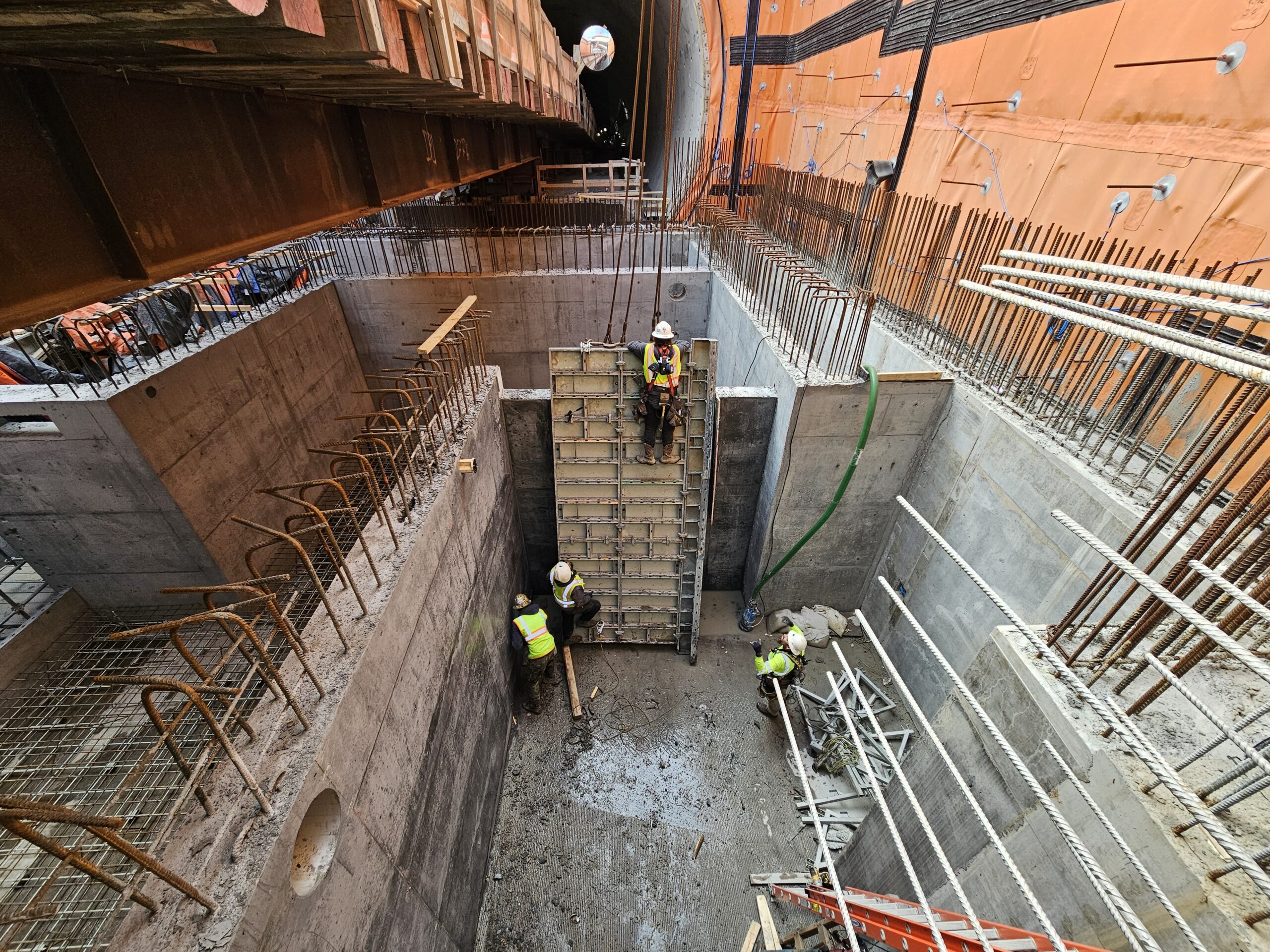
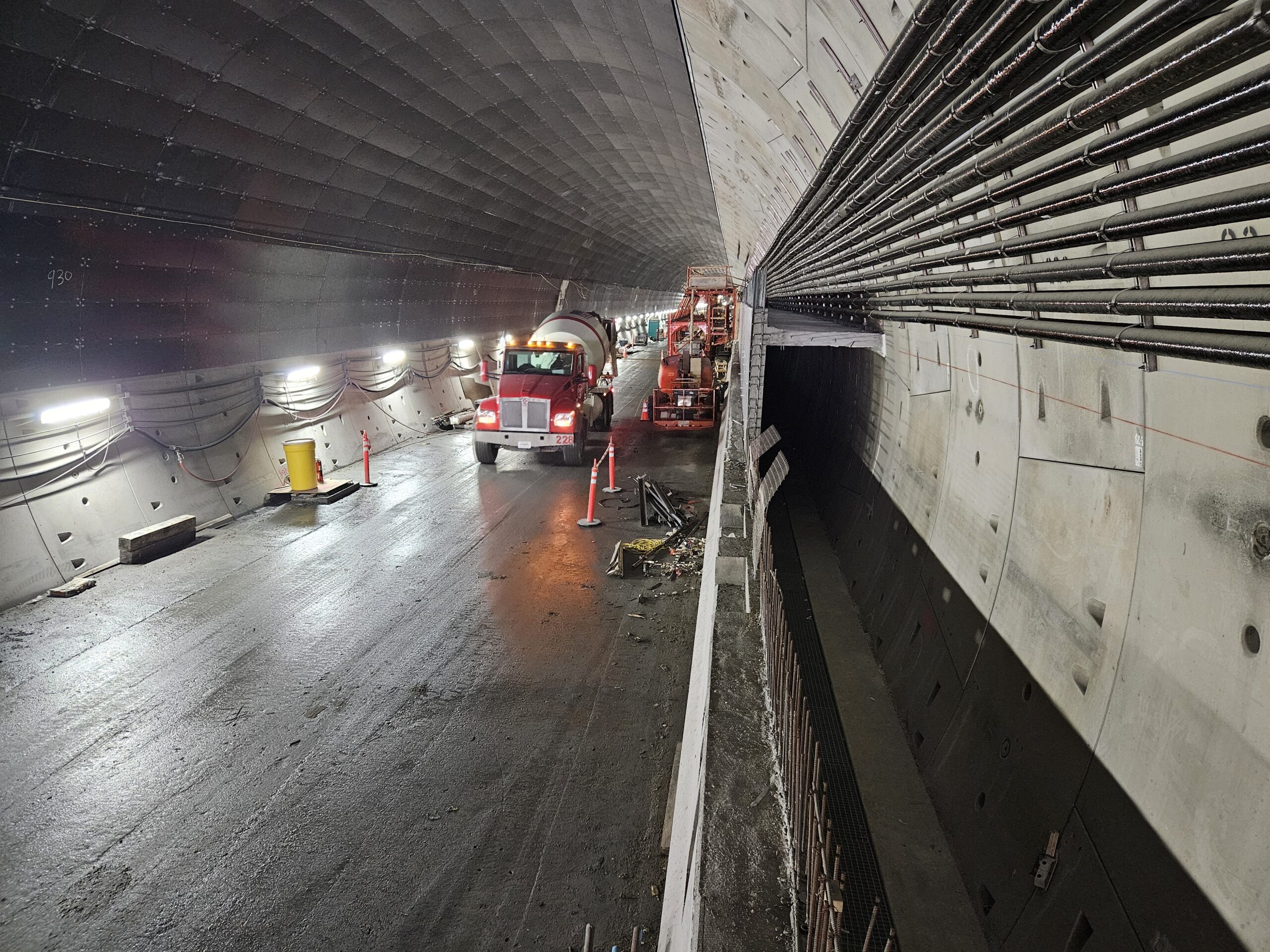
Crews from CTJV continue installing drainage piping within the tunnel while advancing construction of the egress corridor. This drainage pipe is positioned within a trench in the corridor floor and will carry discharge water from the low-point pump room. A removable panel system will safely cover this trench while allowing for future access.
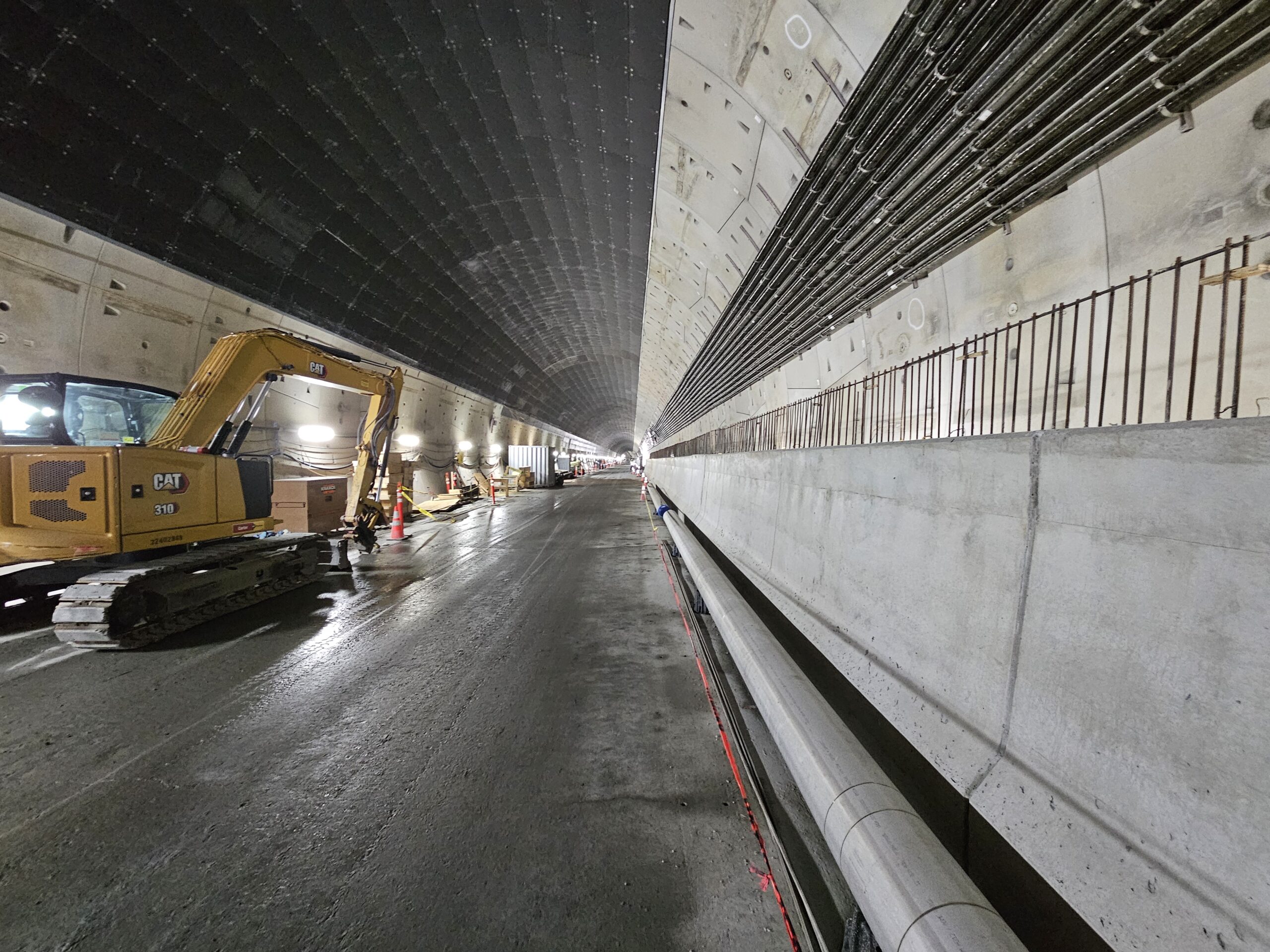
The egress corridor will provide maintenance access to the low-point pump room as well as serve as a place of refuge in the event of an incident inside the new tunnel.
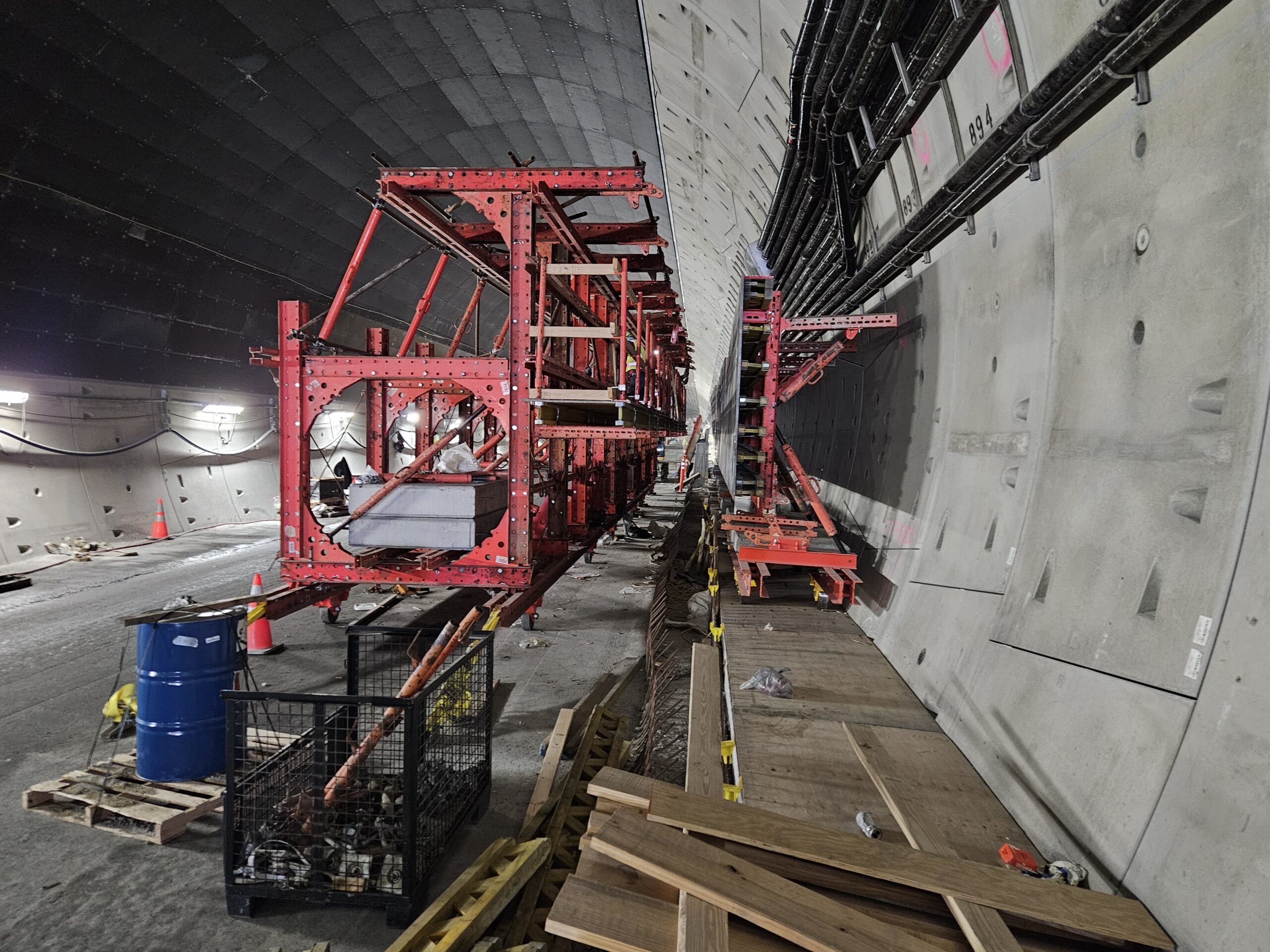
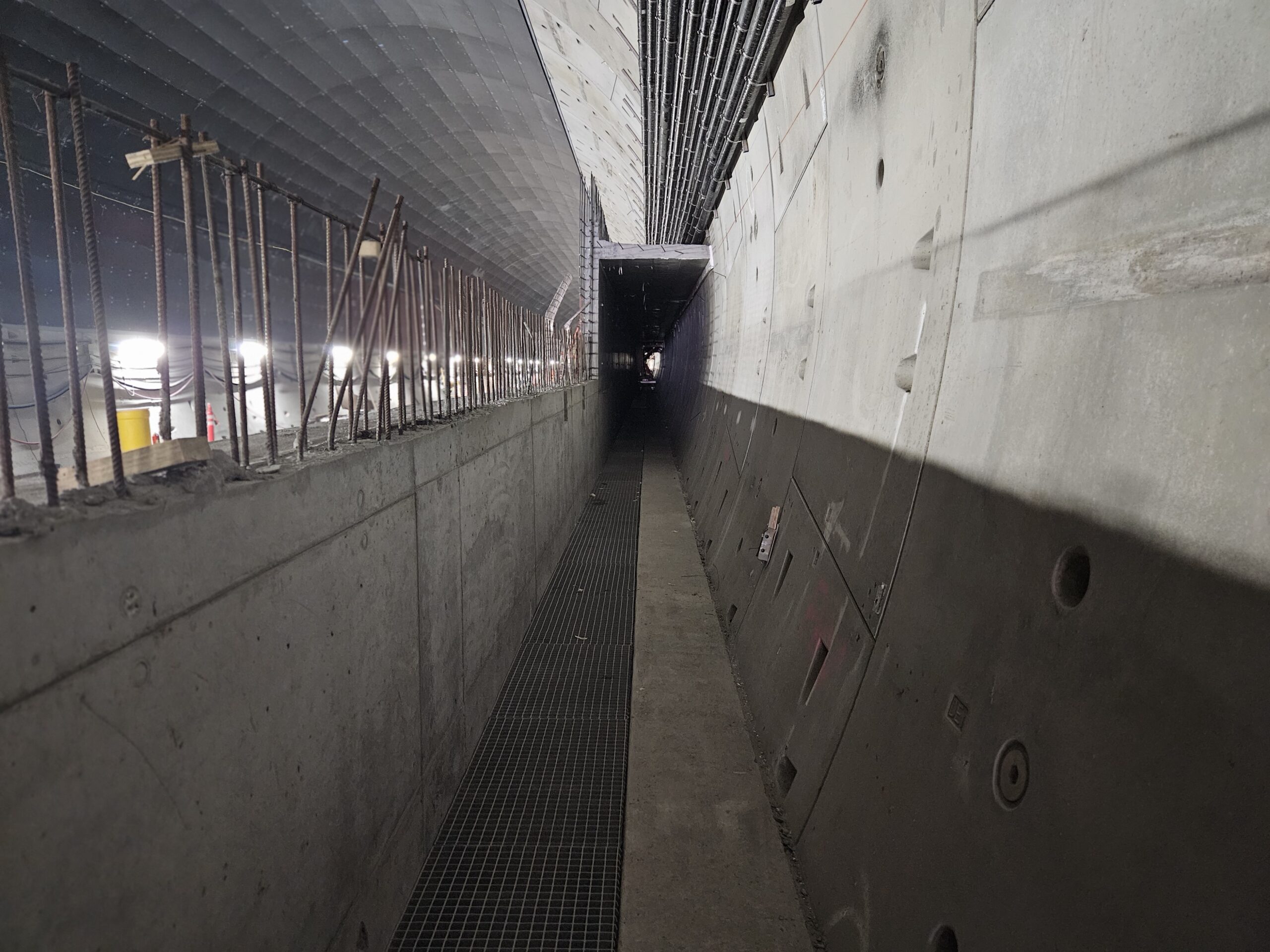
Passive fire protection boards are now visible along the crown of the tunnel. These boards are designed to shield the concrete tunnel segments from the initial heat of a potential fire.
Tunnel ballast placement has been completed.